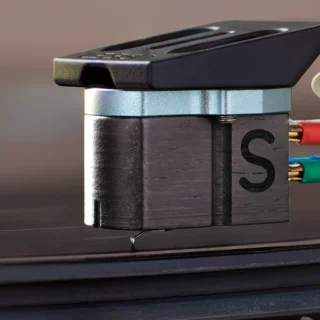

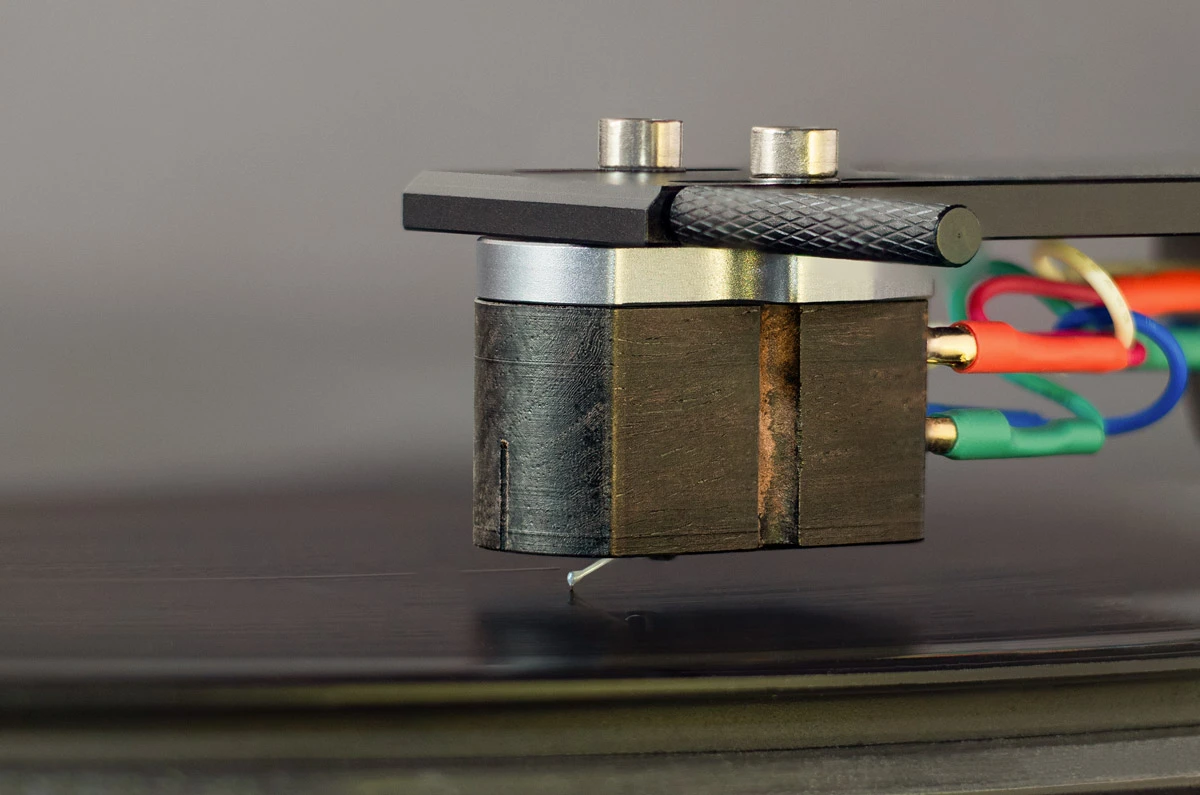
LS10 MKII Cartridge
The original Le Son, still the only one built around Dr. Tsai’s ECC generator
990 $
Shipping and customs duties included
Worldwide delivery, duties and taxes included. Main markets: typically 8–16 days. See times by region
Atelier direct price i
Atelier direct price
The original Le Son, still the only one built around Dr. Tsai’s ECC generator
Independently reviewed by TNT-Audio, Needles & Grooves and Alpha Audio
Customer reviews on Trustpilot
Reviewed by TNT-Audio, Needles & Grooves and Alpha Audio
Customer reviews on Trustpilot
The original Le Son, still the only one built around Dr. Tsai’s ECC generator
A low-output design built around an invention: the generator that cancels its own eddy currents
“From the first drop of the stylus, LeSon LS10 MKII sounded fantastic and tracked beautifully.”
M. L. Gneier, TNT-Audio
The LS10 MKII is the original Le Son: the cartridge Dr. Tsai built around ECC, a generator that arranges its eddy currents to cancel each other, so the coils read the groove with nothing of their own working against them. It is still the only cartridge we make with this system.
It keeps a practical 0.40 mV of output, so it asks what any dedicated MC phono stage provides: 56 to 65 dB of gain and a load of 75 ohms or more.
Not sure the cartridge matches your tonearm and phono stage? Send us your system details and I will check the match before you order.
Gregory, founder

How the LS10 MKII fits within the Le Son range
A comparative view of the four Le Son cartridges. Start with your phono stage, output level and gain follow from there.
 LS10 MKII LS10 MKII |
 LS10 MKII “S” LS10 MKII “S” |
 LS10 MKII “G” LS10 MKII “G” |
 SL1 MKII SL1 MKII |
|
|---|---|---|---|---|
| Price | 990 $ | 1,490 $ | 1,890 $ | 690 $ |
| Place within the collection | Core low-output MC | Silver-coil low-output MC | Very low-output flagship | High-output MC for MM inputs |
| Output | 0.40 mV | 0.50 mV | 0.10 mV | 2.5 mV |
| Phono stage context | MC phono stage | MC phono stage | High-gain MC stage or quality SUT | MM phono stage |
| Suggested overall gain | 56 to 65 dB | 56 to 65 dB | 70 to 78 dB | Standard MM input |
| Coil material | 6N OFC Copper | 5N OCC Silver | Gold-plated 5N OCC Copper | 6N OFC Copper |
| Cantilever | Boron Nitride Rod | Boron Rod | Boron Nitride Rod | Boron Nitride Rod |
| Stylus | Shibata V | Line Contact | Special Line Contact | Line Contact |
| Compliance | 15 μm/mN | 15 μm/mN | 15 μm/mN | 16 μm/mN |
| Tonearm effective mass | 5–25 g | 5–25 g | 5–25 g | 4–24 g |
| Sonic character | Balanced, vivid, captivating | Refined, fluent, involving | Effortless, full-bodied, mesmerizing | Clear, warm, enveloping |
| Choose it if | your system has suitable MC gain and you want the core low-output Le Son reference | you want greater openness and nuance while staying within a straightforward gain structure | your system is ready for a 0.10 mV cartridge and you want the most advanced LS10 expression | your phono stage uses an MM input and you want a high-output moving-coil cartridge |
| View LS10 MKII “S” | View LS10 MKII “G” | View SL1 MKII |
Not sure which one suits your system? Contact the atelier, and we will review the match before you order.
The LS10 MKII difference
6N OFC copper coils, 6.8-ohm internal impedance, a boron nitride rod cantilever, and a Shibata V stylus.
The core of the LS10 range, and the only Le Son built around the ECC generator.
When the stylus eventually wears, the LS10 MKII can be retipped in our atelier, from $390.
ECC generator system
In a moving coil cartridge, unwanted eddy-current behavior can blur energy, timing and openness.
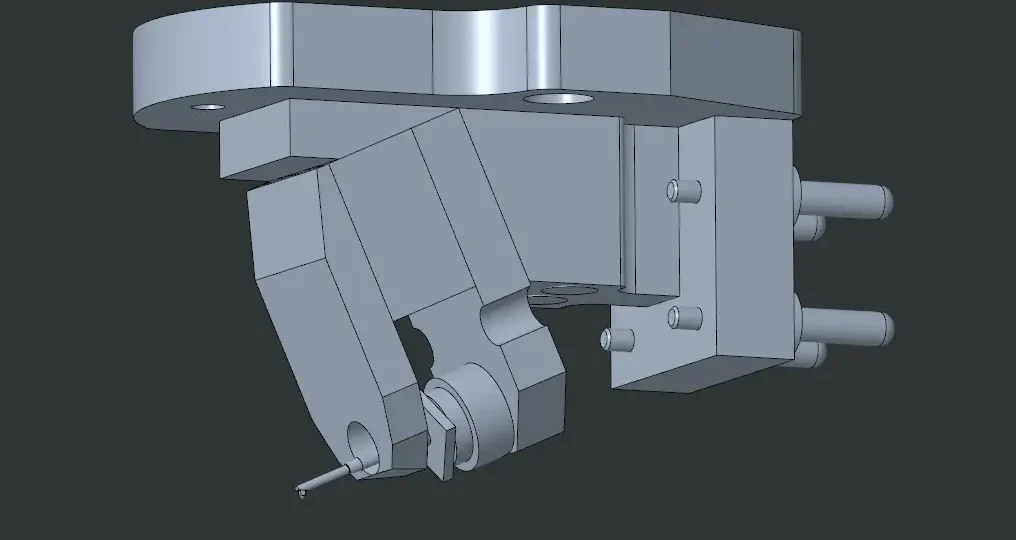
The LS10 MKII’s ECC generator system was developed to reduce this effect and preserve more of the cartridge’s speed, density and natural flow.
The result is a generator that does less to the signal it creates. What the coils lift from the groove travels on with less of the motor’s own interference: the idea the LS10 MKII is built around, and a system that remains unique to it within the Le Son range.
Boron nitride cantilever
The LS10 MKII features a boron nitride ceramic rod cantilever, chosen for its low moving mass and fast vibration transmission.
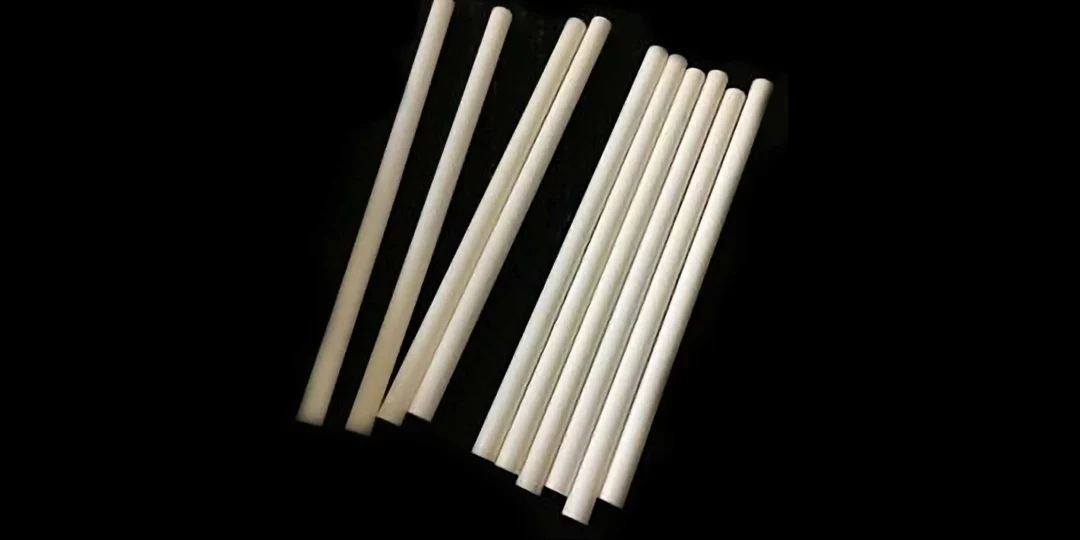
Compared with aluminum, which is commonly used in high-end cartridges, boron nitride offers a notable advantage through stronger stiffness-to-weight relationship, helping groove movement pass from stylus to generator with speed and control.
Rigidity (GPa)
Density (g/cm3)
What the stylus reads must reach the coils unchanged, and the cantilever is the only road between them. Boron nitride keeps that road stiff and nearly weightless, so the groove’s smallest movements arrive whole: a choice the LS10 platform keeps all the way up to the flagship “G”.
Shibata stylus
The LS10 MKII is equipped with a Shibata V stylus, a line-contact profile designed to trace fine groove information with precision.
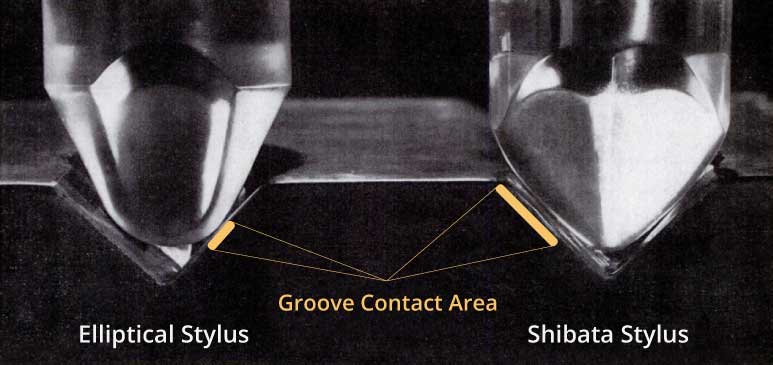
Point Contact vs Line Contact: The Shibata stylus offers a line contact with record grooves, as opposed to the point contact of an elliptical stylus.
This design gives the LS10 MKII two important advantages.
First, refined tracking. The Shibata profile helps the stylus follow fine groove modulations with greater contact and control, revealing texture, space and low-level musical information with more ease.
Second, gentler groove contact. Because the contact area is longer than a conventional elliptical profile, the tracking force is distributed over a larger part of the groove wall.
For the listener, this means the LS10 MKII is not merely revealing. When correctly set up, it is also designed to treat valuable records with the care they deserve.
The work of Dr. Tsai

The LS10 MKII was shaped by Dr. Ted Tsai’s long work on moving coil cartridge design and generator behavior.
One of the central challenges was the control of eddy currents, small electrical effects that can interfere with the purity and responsiveness of the signal inside a moving coil generator.
The ECC system was developed to reduce this interference and preserve more of what matters musically: timing, density, openness and natural flow.
Understanding eddy currents in audio technology
Eddy currents are electric currents circulating in conductors like eddies in the oceans.

Image: NASA Scientific Visualization Studio
These currents are induced by changing magnetic fields and flow in loops perpendicular to the magnetic field. In moving coil cartridges, these currents are generated as the conductor moves through the magnetic field.
The impact of eddy currents on sound quality
Eddy currents create their own magnetic fields, which, according to Lenz’s Law, oppose the initial magnetic field change. This reaction can adversely affect the movements of the cartridge’s cantilever, impacting the overall sound quality.
Dr. Tsai’s solution: eddy current cancellation
To reduce these effects, Dr. Tsai moved beyond conventional approaches such as laminated cores or nonconductive materials.
His solution was a generator architecture in which opposing eddy-current forces are arranged to cancel each other more effectively.
This is the principle behind ECC, Eddy Current Cancellation, first introduced by Le Son in the LS10 MKII.
60-day home evaluation
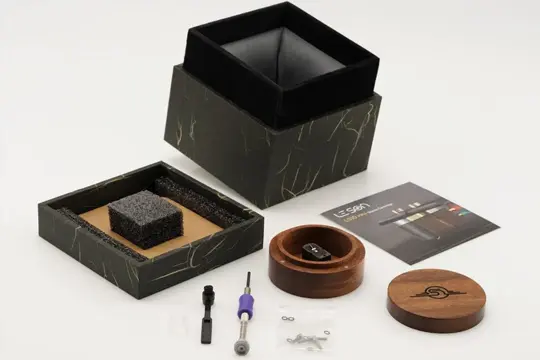
The LS10 MKII can be evaluated where it matters most: in your own system, with your own tonearm, phono stage and records.
You have 60 days to listen calmly, allow the cartridge to settle, refine the setup and decide whether it belongs in your analog front end.
If it is not the right match, please contact us within the evaluation period and we will guide you through the return process according to our return conditions.
Easy installation
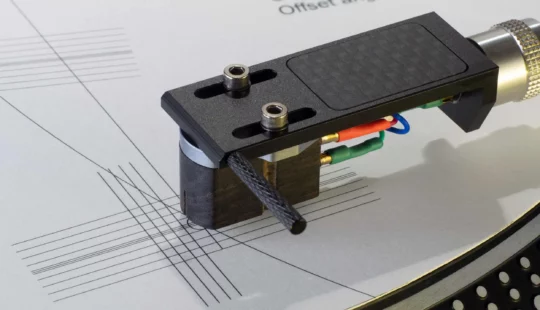
The LS10 MKII uses a pre-threaded body, so mounting does not require loose nuts.
Its straight sides also make visual alignment easier, helping the installation feel calmer and more controlled.
Careful setup still matters, but the cartridge is designed to make the process less intimidating.
Personal setup guidance
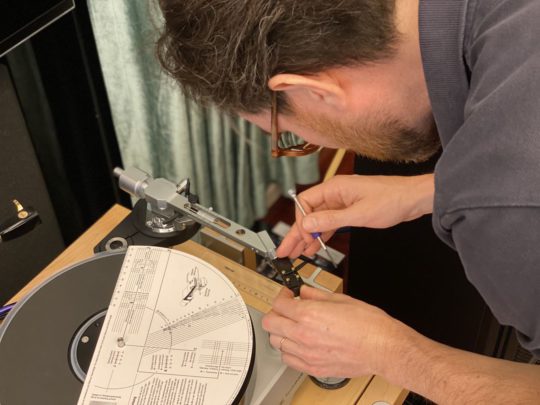
With every LS10 MKII cartridge, we are happy to help you review the key setup points before listening seriously.
This may include mounting, alignment, tracking force, anti-skate, phono-stage gain and loading.
If you are unsure about your tonearm, phono stage or SUT, please contact us before ordering. A few system details are often enough to confirm whether the LS10 MKII is the right direction.
This direct guidance is part of the Le Son experience.
Specifications
Physical
- Cartridge Type: Moving Coil (Stereo)
- Body: Aluminum & Carbon Fiber Socket, Ebony Wood Casing
- Stylus: Diamond, Shibata V Shape
- Cantilever: Boron Nitride Ceramic Rod
- Coils: 6N Copper
- Weight: 7.9 grams
Electrical
- Output Voltage: 0.40 mV at 5 cm/s
- Internal Impedance: 6.8 ohms
- Frequency Response: 15 – 45,000 Hz
- Channel Separation: Better than 30 dB at 1 kHz
- Channel Balance: Better than 0.5 dB
Dynamic
- Tracking ability: 80 μm at 315 Hz with 2 g tracking force
- Dynamic Compliance: 15 μm/mN at 10 Hz
Setup
- Recommended Loading: 75 ohms minimum
- Recommended Gain: approximately 56–65 dB, or a suitable step-up transformer
- Recommended Vertical Tracking Force (VTF): 1.7 – 2.1 grams
- Reference Vertical Tracking Force (VTF): 1.9 grams
- Recommended Tonearm Mass: Medium
- Run-in Period: 30 hours
Accessories
- 1 x Stylus Brush
- 1 x Hexagonal Screwdriver
- 1 x Stylus Guard
- 2 x Short Mounting Screws & Washers
- 2 x Medium Mounting Screws & Washers
- 2 x Long Mounting Screws & Washers
“The Le Son LS10 MKII is an incredibly musical performer, offering a rich, smooth, and cohesive delivery that connects the listener to the essence of the music.”
Marek Dyba, HiFi Knights
Frequently Asked Questions
- Where can I read reviews of the LS10 MKII cartridge?
- Is there a warranty for the LS10 MKII cartridge?
- With which turntables or tonearms can I use the LS10 MKII cartridge?
- What is the stylus lifespan of the LS10 MKII cartridge?
- Can the LS10 MKII cartridge be retipped?
- What is the recommended phono preamplifier gain for the LS10 MKII cartridge?
- How does the LS10 MKII compare with the LS10 MKII “S” and “G”?
Independent reviews of the LS10 MKII are available from TNT-Audio, Needles & Grooves, Alpha Audio, Audio Video Magazine and HiFi Knights.
You can also read customer feedback on Trustpilot.
Together, these sources give a broader view of how the LS10 MKII has been received in different systems and by different listeners.
Yes. The LS10 MKII is covered by a 2-year warranty under normal use.
Warranty coverage applies to defects in materials or workmanship. It does not cover misuse, improper installation, unauthorized modification, external damage, or normal stylus wear.
If an issue appears, please contact us with your order details, serial number and a clear description of the symptom.
The LS10 MKII has a dynamic compliance of 15 μm/mN and is generally intended for medium-mass tonearms.
The ideal match still depends on the full setup, including tonearm effective mass, headshell, mounting hardware and phono-stage configuration.
If you are unsure, send us your turntable, tonearm and phono-stage details before ordering. We will be happy to help you check whether the LS10 MKII is a coherent match.
Stylus life depends on setup accuracy, record cleanliness, tracking force, handling and hours of use.
With clean records and correct tracking force, the Shibata V stylus typically serves 800 to 1,000 hours of listening before renewal. From around 800 hours, we recommend a stylus inspection: we examine the cartridge under the microscope and advise before any work is quoted.
If tracking, distortion or tonal balance changes noticeably after extended use, contact us at any time.
Yes. The LS10 MKII can be retipped or serviced where appropriate.
When the stylus is worn, or if performance changes after long use, please contact us and we will confirm the most suitable service path.
Current conditions, pricing and timing are confirmed before any work begins.
The LS10 MKII has an output of 0.40 mV at 5 cm/s and is intended for a suitable MC phono stage or an MM phono stage used with an appropriate step-up transformer.
If step-up transformers are new to you, learn how an MC step-up transformer works.
As a practical starting point, many systems will be comfortable with MC gain in the approximate 56 to 65 dB region, with loading at 75 ohms or above.
If you share your phono stage or SUT model, we will be happy to suggest a sensible starting point.
The LS10 MKII is the core low-output Le Son reference and the most balanced starting point in the LS10 family.
The LS10 MKII “S” is the version wound in 5N OCC silver: the same design discipline, at an output most serious MC phono stages are ready for.
The LS10 MKII “G” is the apex of the line, taken to its lowest output and lightest moving system. It is the natural choice once the gain, loading and noise floor of the system are ready for a 0.10 mV cartridge.
If you are unsure where to begin, the LS10 MKII is often the most natural recommendation.
Not sure whether the LS10 MKII suits your system?
Our Before You Buy guide covers the main compatibility questions, including tonearm mass, phono-stage gain and loading.
If you would like personal advice, send us your turntable, tonearm and phono-stage details. We will be happy to help you choose with confidence.