

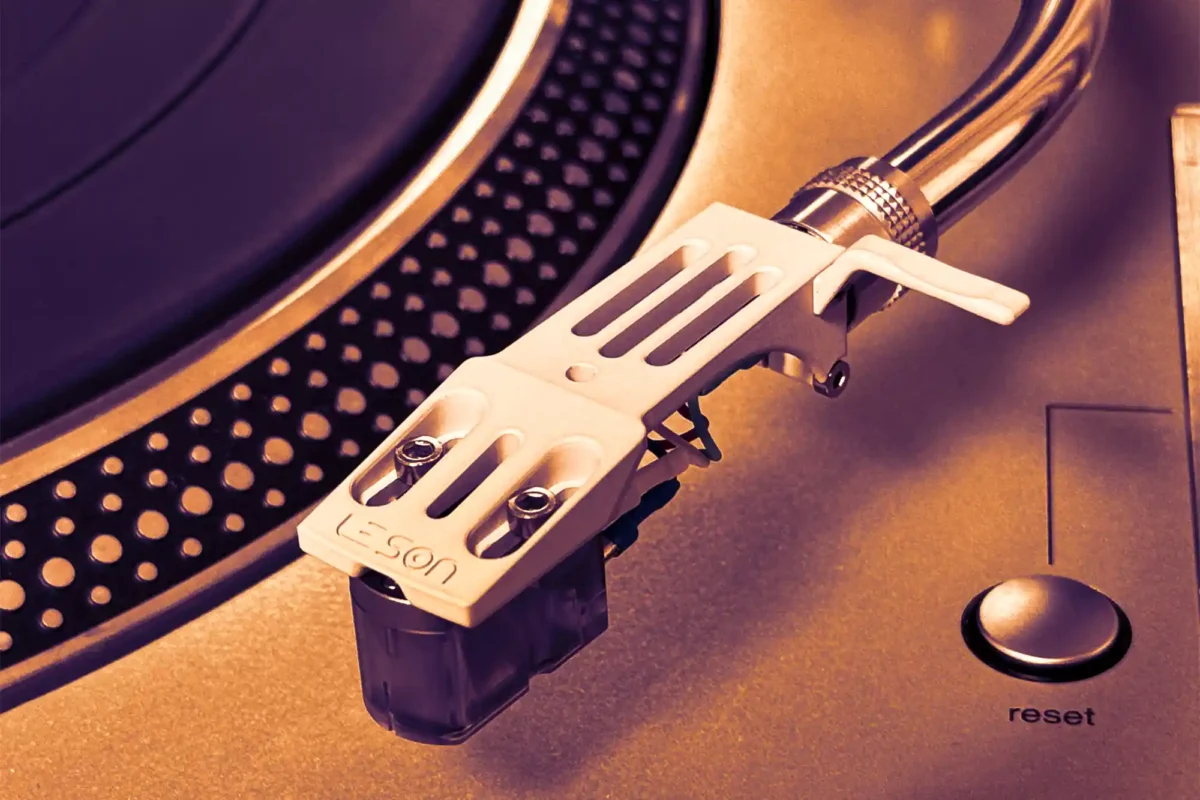
A headshell is the small platform that holds your cartridge at the end of the tonearm. If your tonearm uses a removable headshell, choosing the right one comes down to a few practical questions:
- Does it use the connector your tonearm expects, most often the universal SME-type bayonet
- Does it suit your cartridge’s mounting and weight
- Does it give you enough room to align the cartridge correctly
Material and build matter too, but fit and weight come first.
We design and make moving coil cartridges and fit them on many different tonearms, so this guide reflects what we have learned in practice. Below you will find a quick comparison, the connector types to look for, and a five-step method you can follow.
What is the role of a turntable headshell?
Even though the headshell isn’t as crucial as the cartridge for the sound quality of your turntable, it plays an important role and should therefore be considered carefully.
The headshell is the component coupling the phono cartridge to the tonearm. It provides a stable platform for the cartridge to operate, and provides various options for cartridge alignment.
In addition, the headshell holds a important tactile significance since we directly interact with it while cueing the record.
Fixed vs removable headshells
Since the early 1970’s, tonearm manufacturers started creating fixed headshell arms. The rationale behind is that a fixed headshell provides maximum coupling with the tonearm, less resonances, and better electrical connexion to the phono preamplifier or Step Up Transformer (SUT). Furthermore, the arm becomes lighter and can work better with high compliance cartridges.
For example in 1972, SME realeased the 3009 Series 2 Improved Tonearm featuring a fixed or removable headshell:
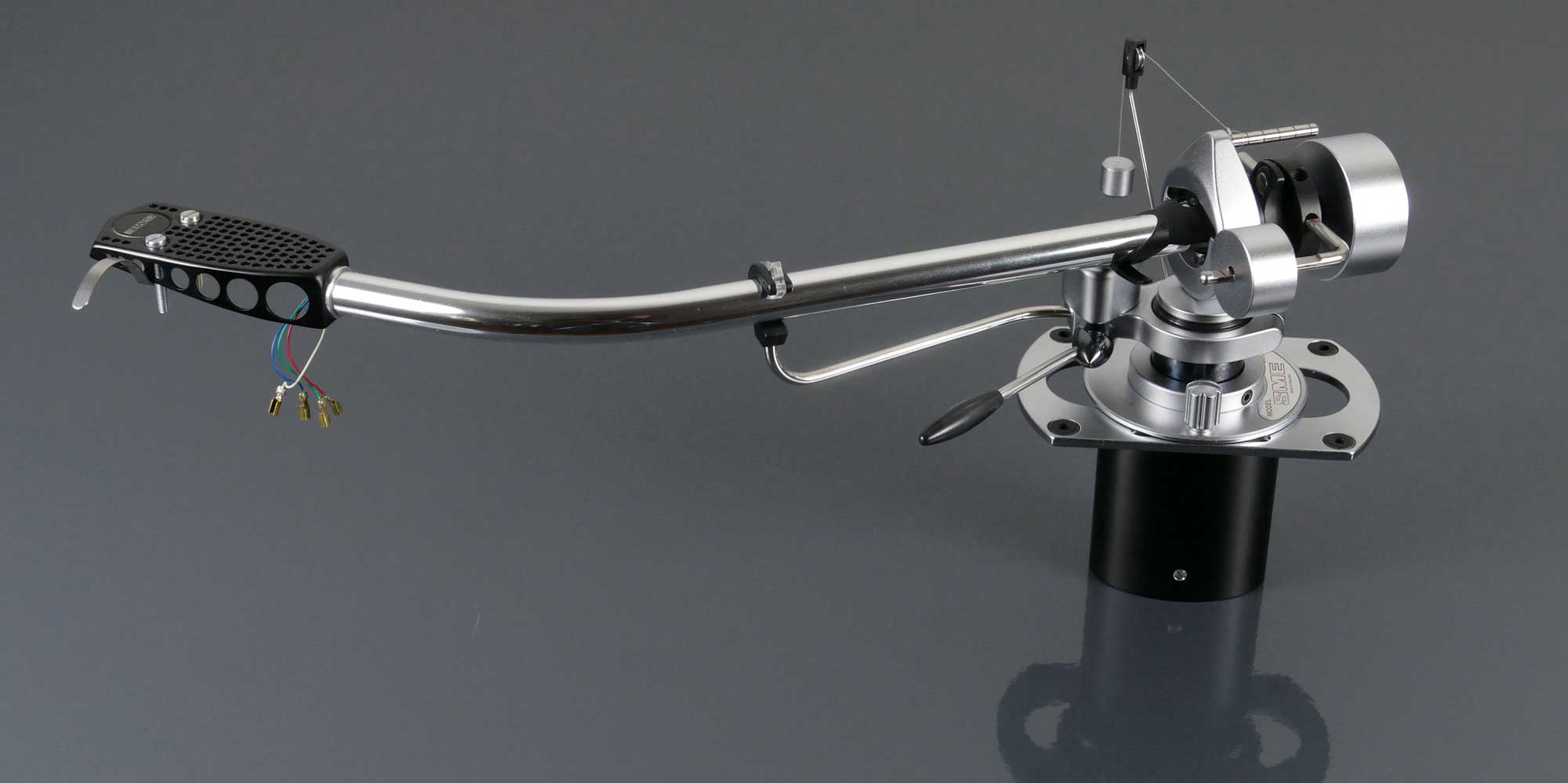
Fixed headshell SME 3009 Series II Improved tonearm
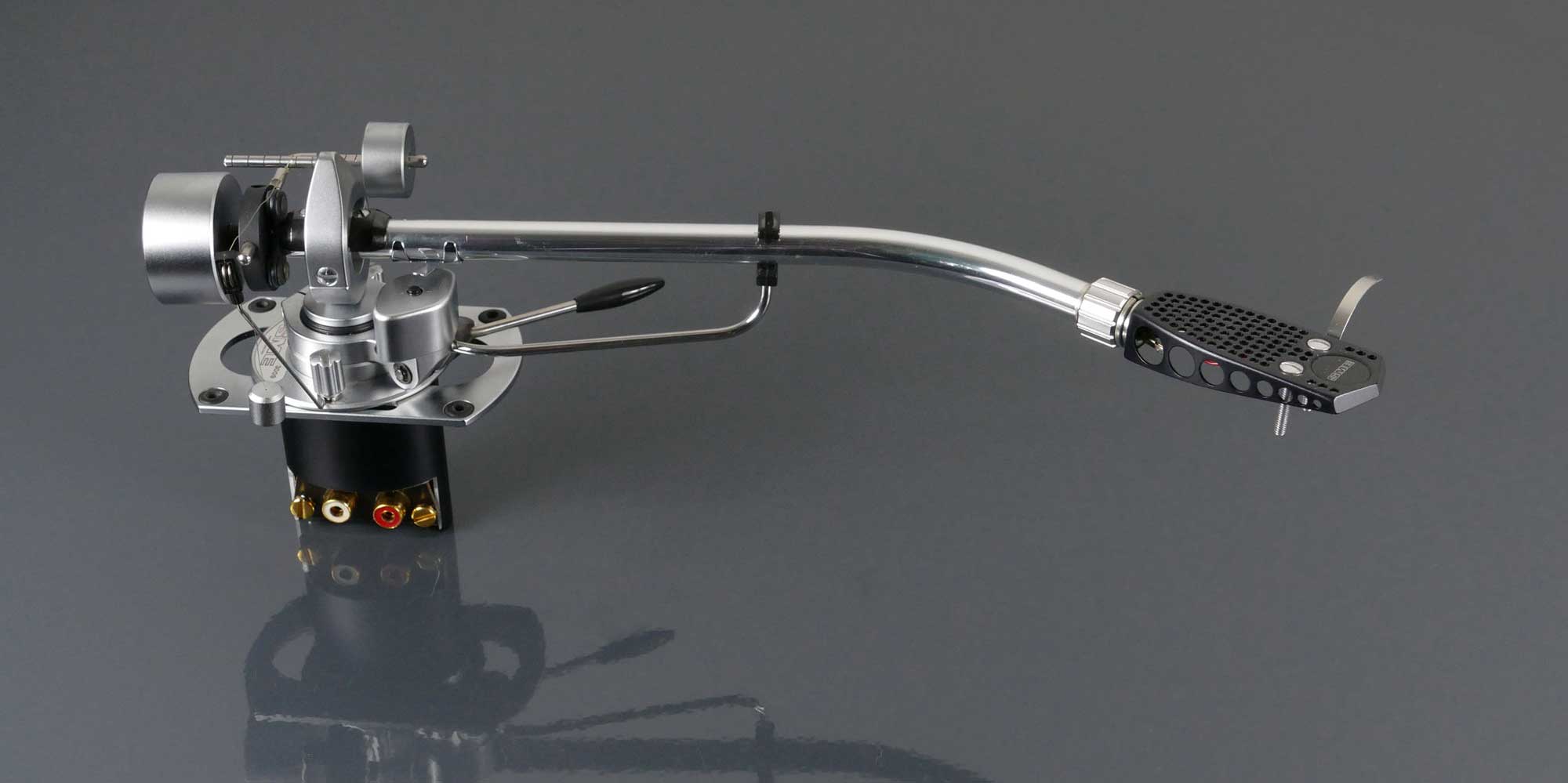
Removable headshell SME 3009 Series II Improved tonearm
From our experience, fixed headshell tonearms are indeed often better, but at the expense of versatility and convenience. This is why many audiophiles still prefer removable headshell tonearms.
In the following guide, we will focus on removable headshells, as if your tonearm features a fixed one, well you cannot really replace it.
How to choose a turntable headshell
in 5 steps
1. Tonearm geometry & connector type
First, you need to make sure you can properly connect your headshell to your tonearm.
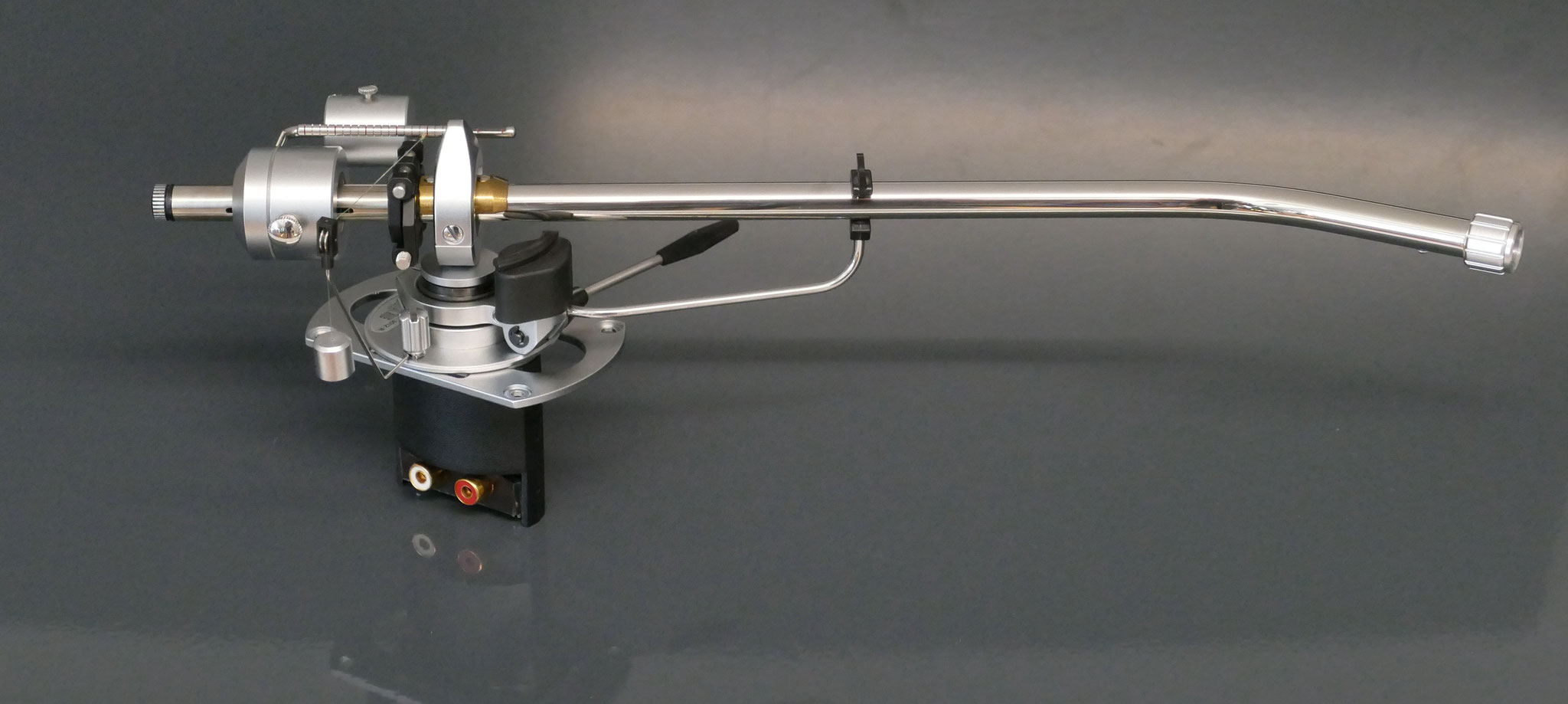
The 3 main tonearm geometries are Straight, J-shaped, and S-shaped:
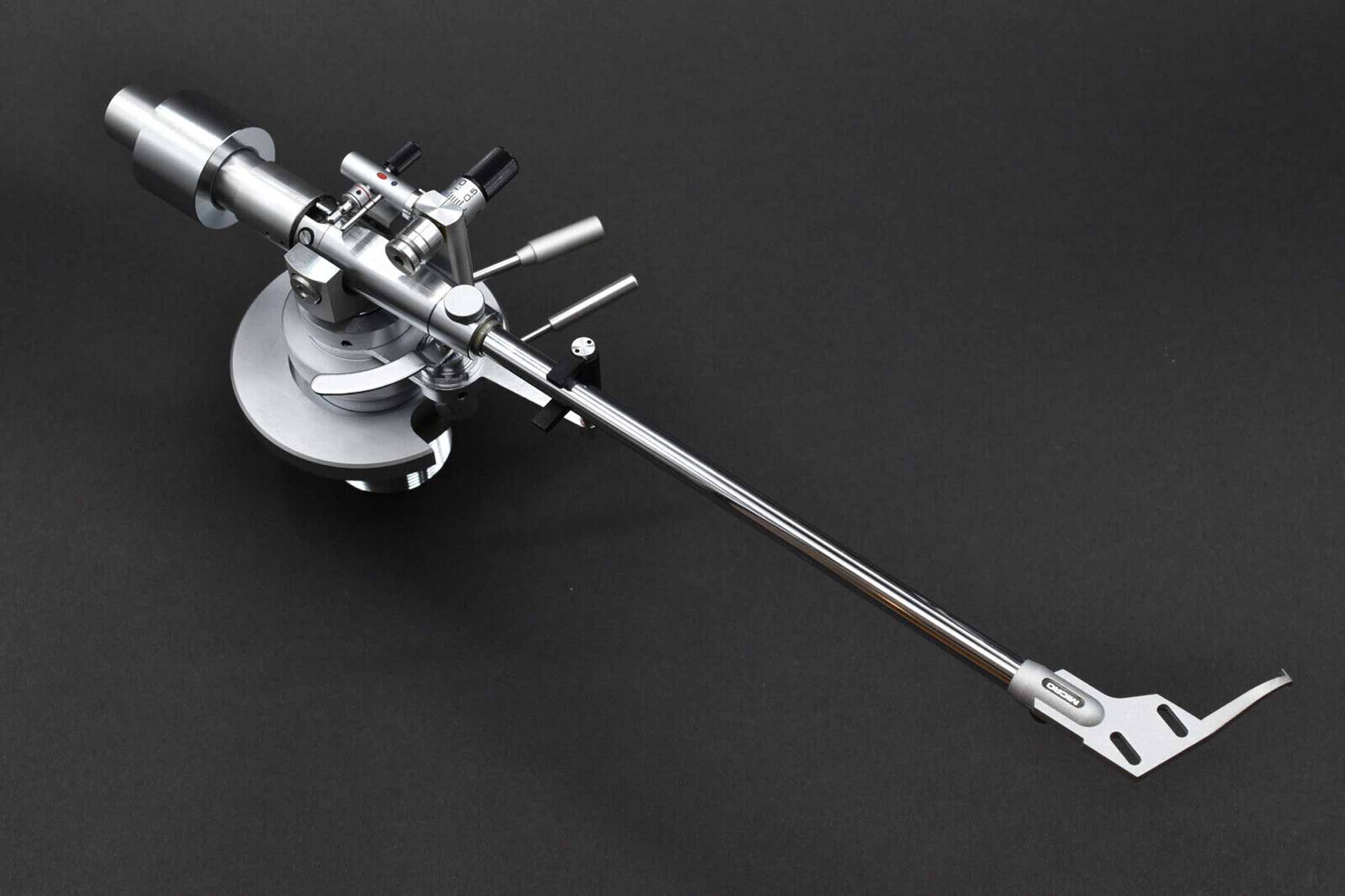
Micro MA-505 MKIII Straight tonearm
SME 3012-R J-shaped tonearm
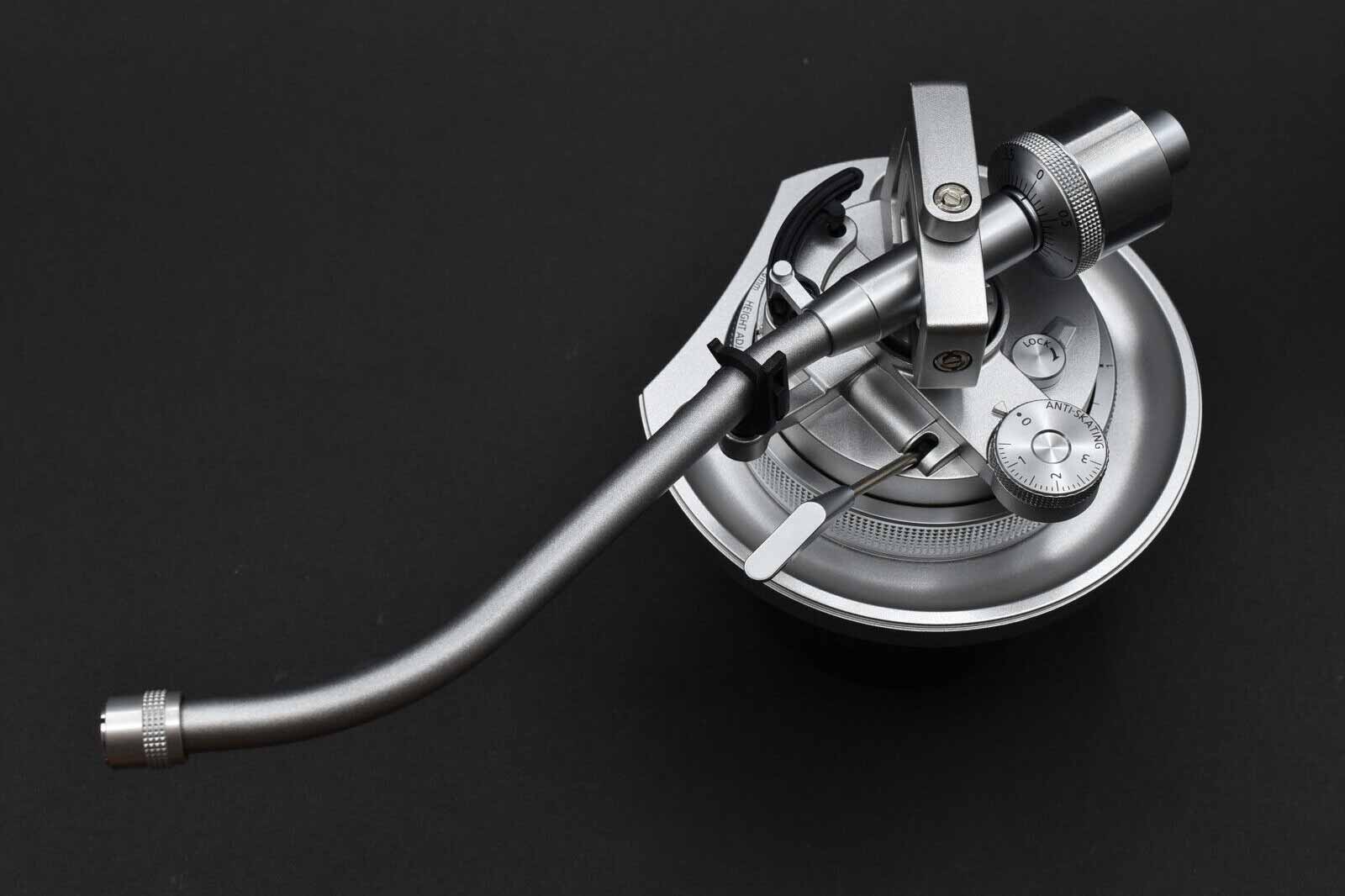
Technics SL-1200G S-shaped tonearm
Straight tonearms generally have a fixed headshell, which is often angled to minimize tracking error. When they feature a detachable headshell, the connector socket is often specific to the turntable manufacturer, so you need to make sure you get the right one.
Brands like Thorens, Denon, and Onkyo often feature proprietary connectors on their vintage models.
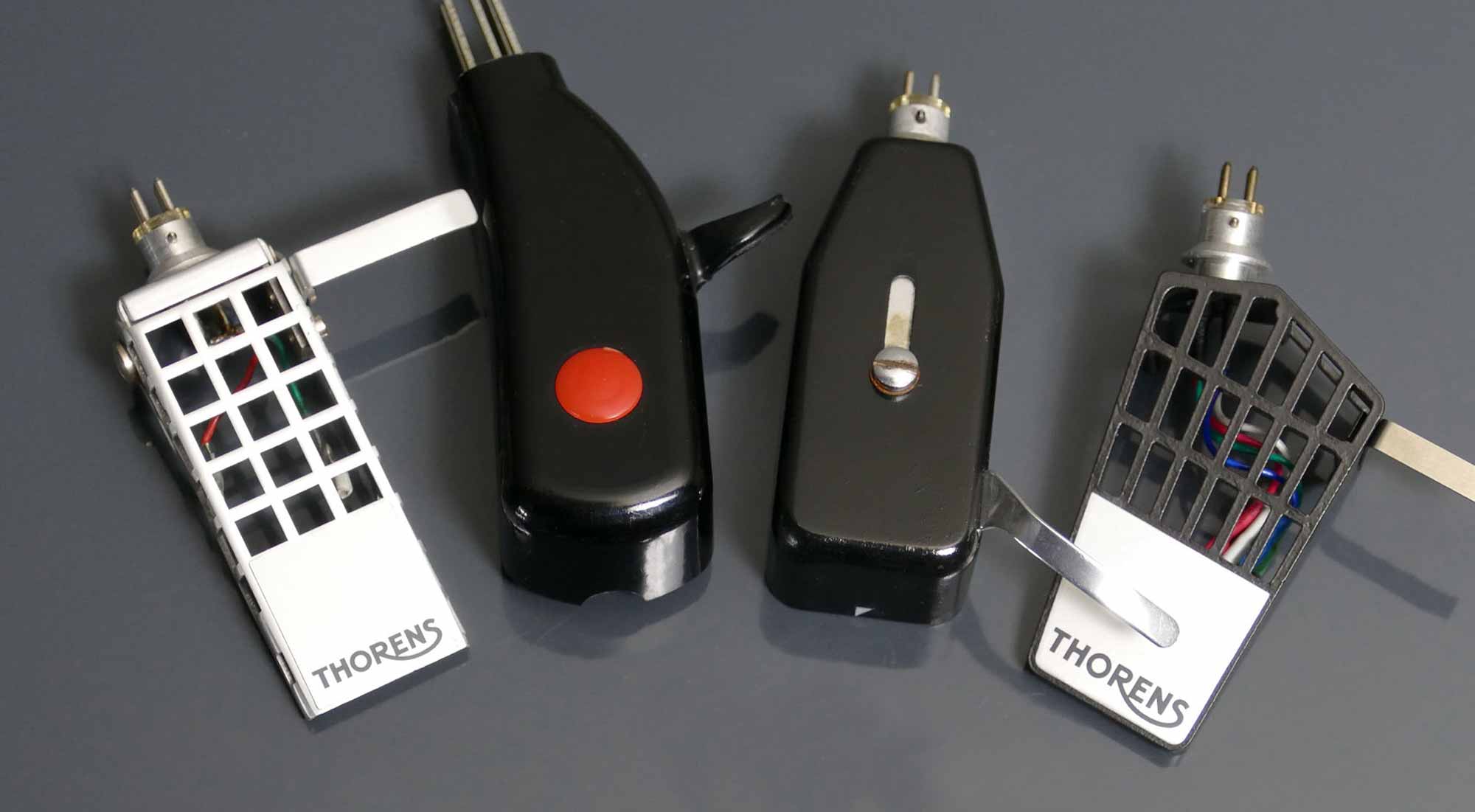
A set of vintage Thorens headshells with their special connectors
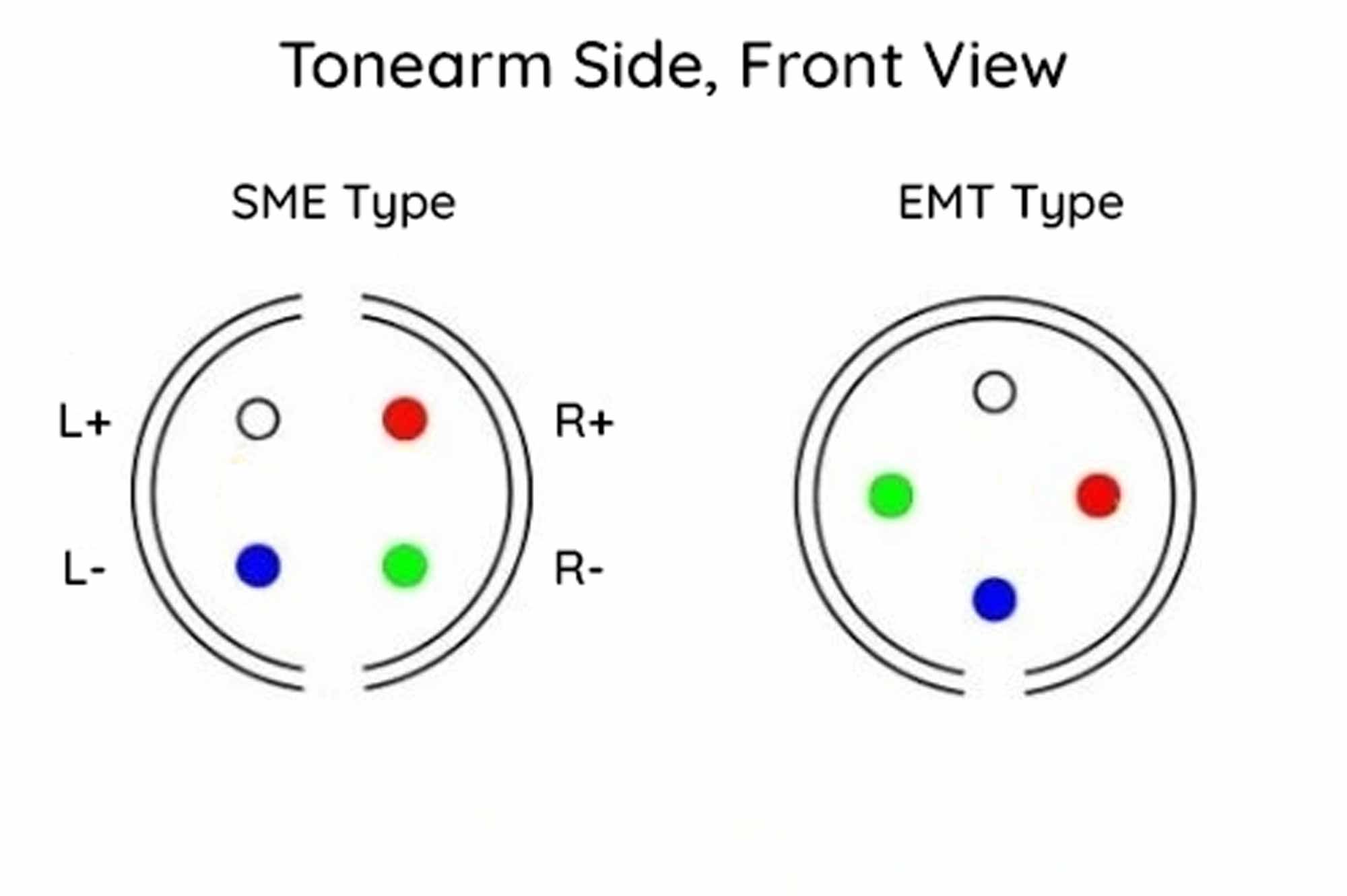
J-shaped and S-shaped tonearms typically use a H-4 Bayonet Mount, also known as “4-Pin Universal Connector” or “SME Type Connector”.
It is so because the British tonearm manufacturer SME Limited pioneered this connector type on its widely used and admired products during the 1960s and 70s.
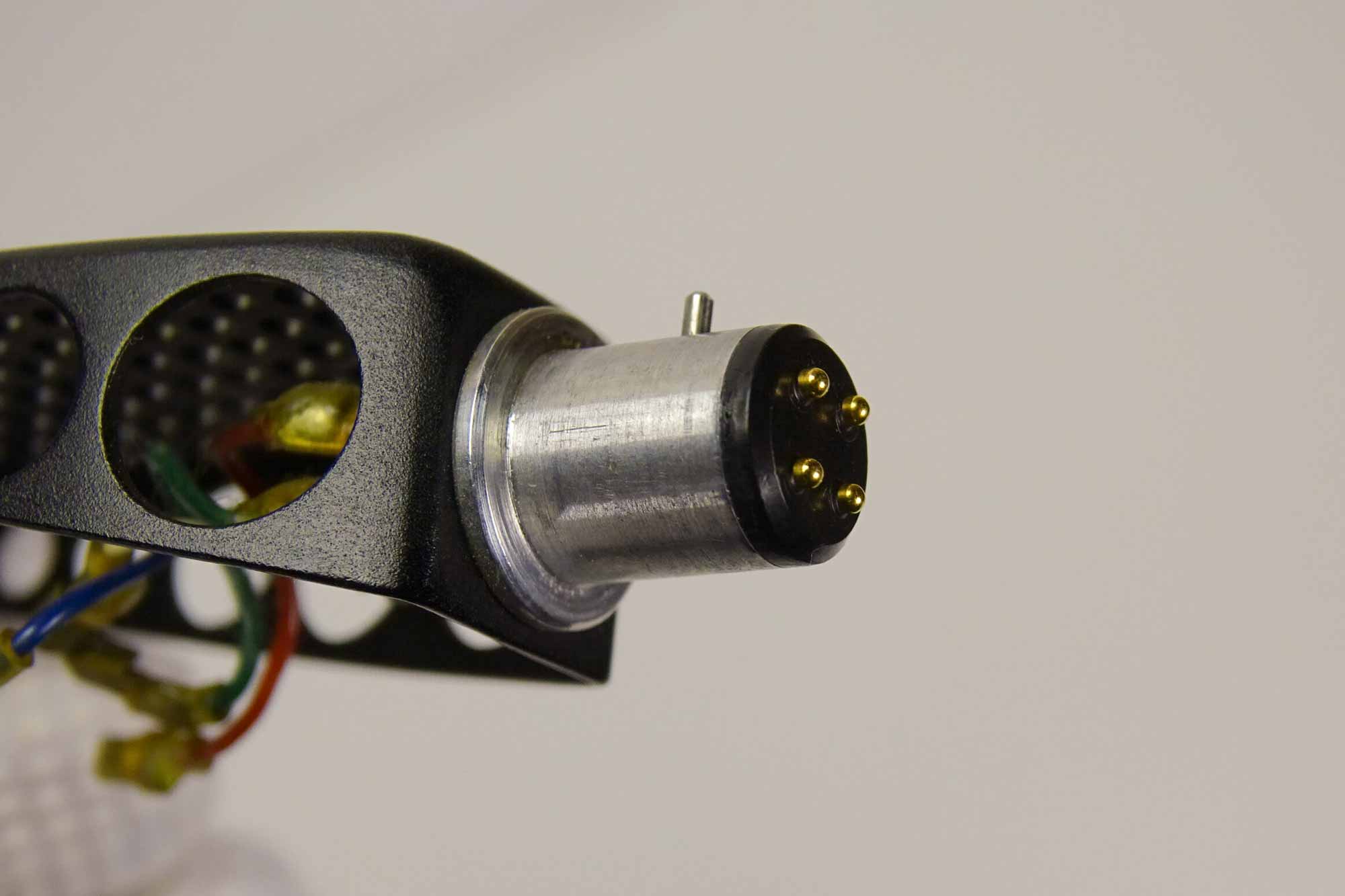
SME type headshell connector
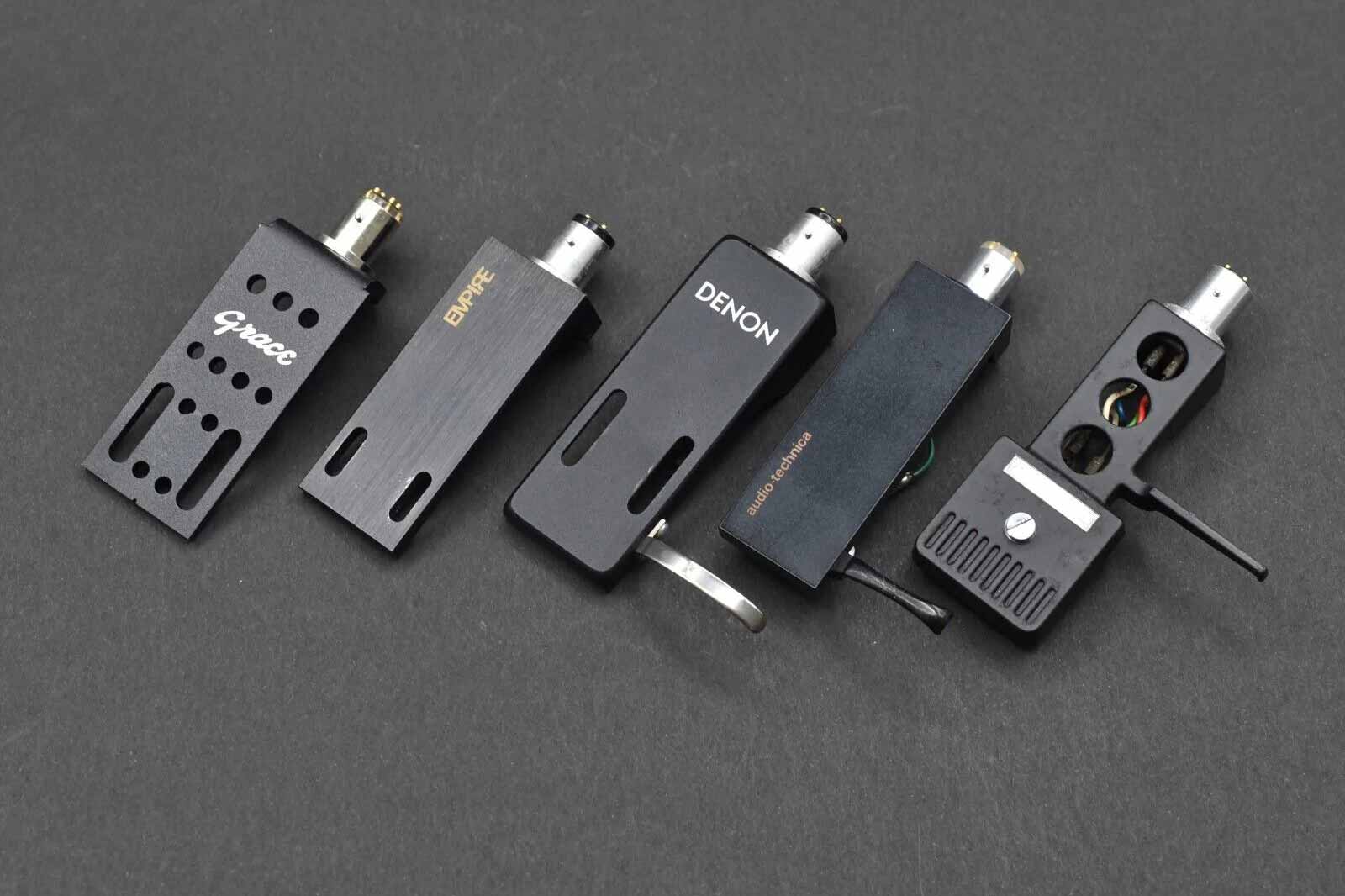
A set of vintage headshells (Grace, Empire, Denon, AT, and Technics) with SME type connector
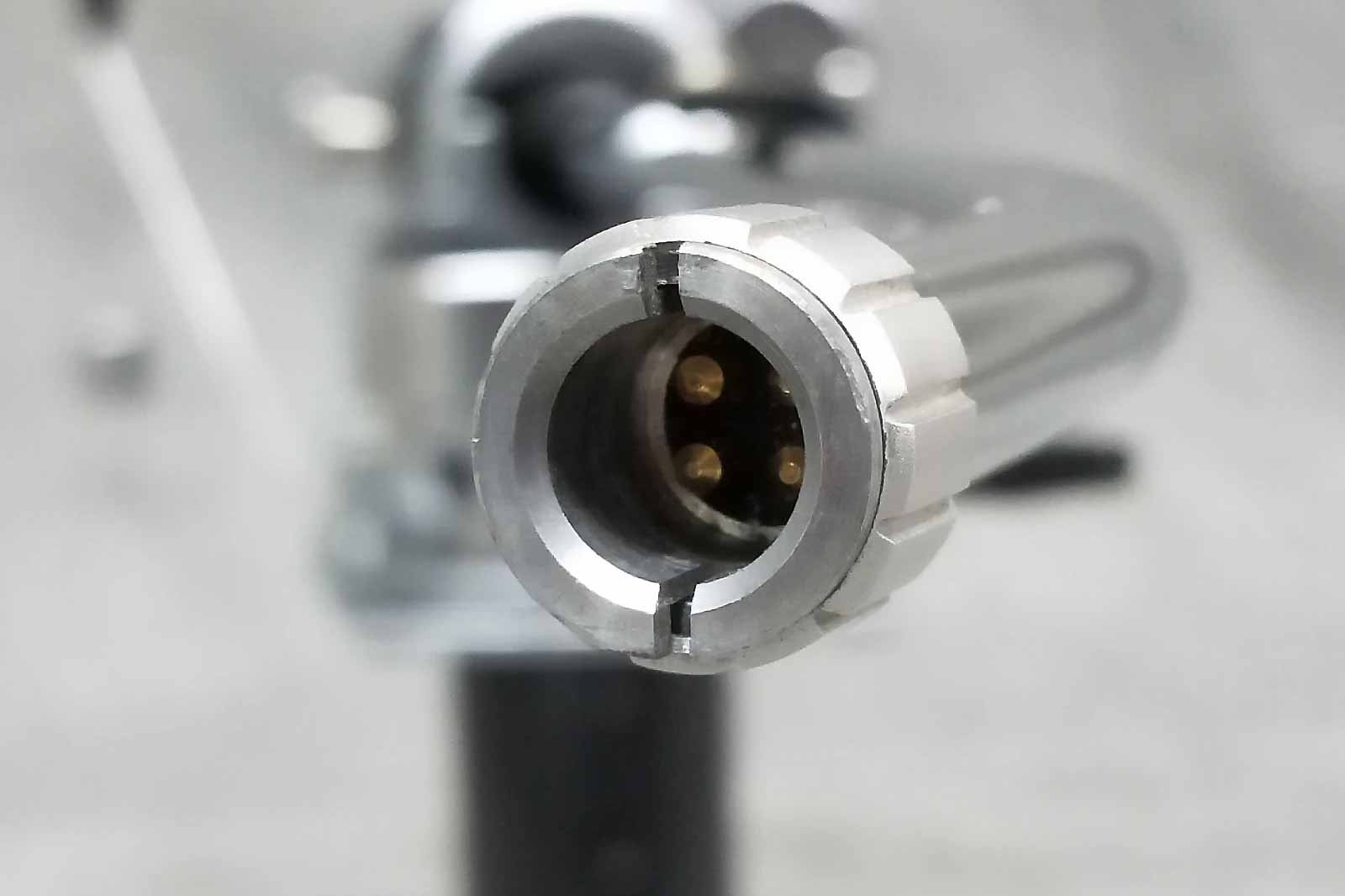
Connector socket on the SME 3012-R Series II arm
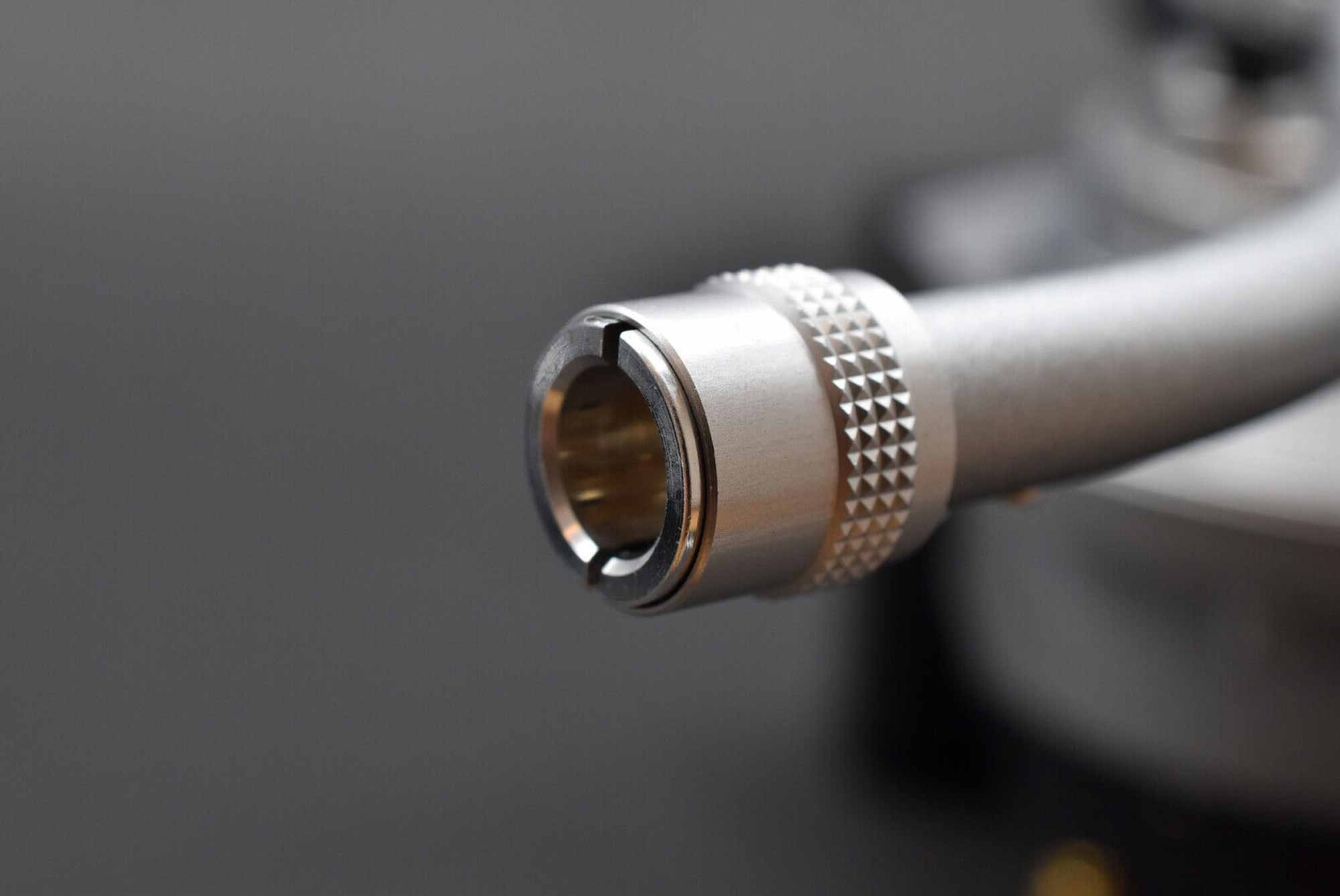
Same connector socket on the Technics SL-1200G turntable arm
Note: the SME type connector looks similar to the EMT-Neumann type connector, but they are actually quite different:
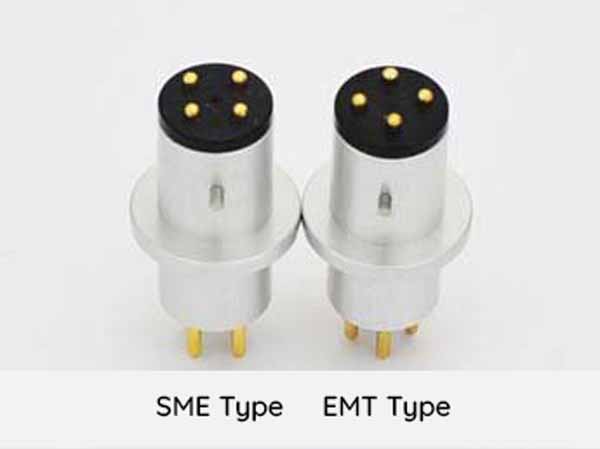
2. Cartridge mounting style
There are two common cartridge mounting styles: the standard 1/2-inch mount and the P-mount (T4P).
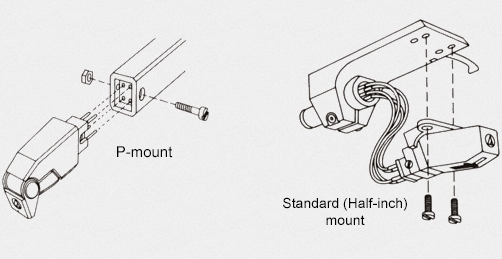
The majority of modern phono cartridges feature the standard 1/2-inch mount (mounting holes are 12.7 mm apart), while some older models or entry-level turntables may utilize the P-mount system.
For a closer look at a modern 1/2-inch moving coil design, see the Le Son LS10 MKII cartridge.
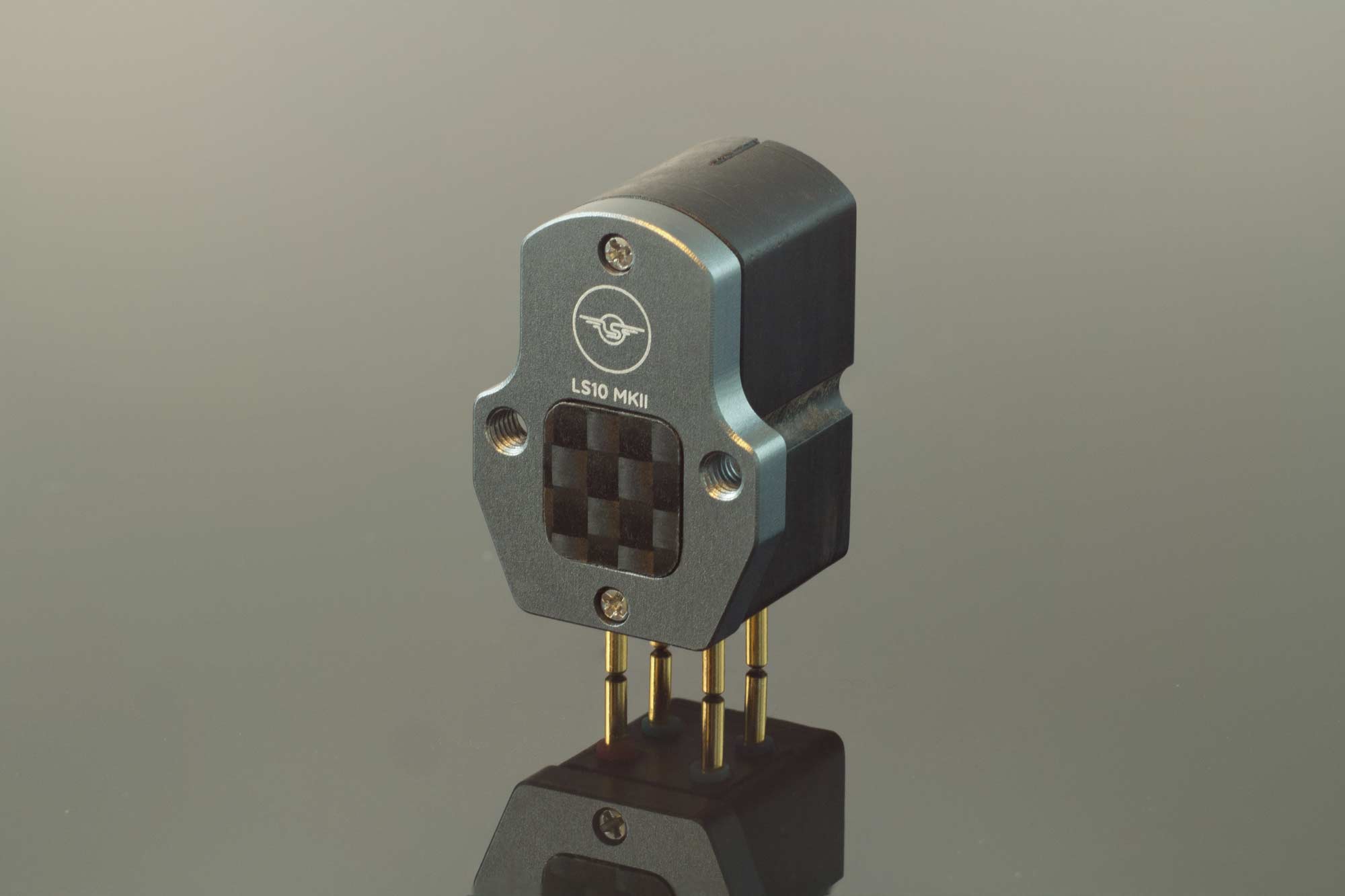
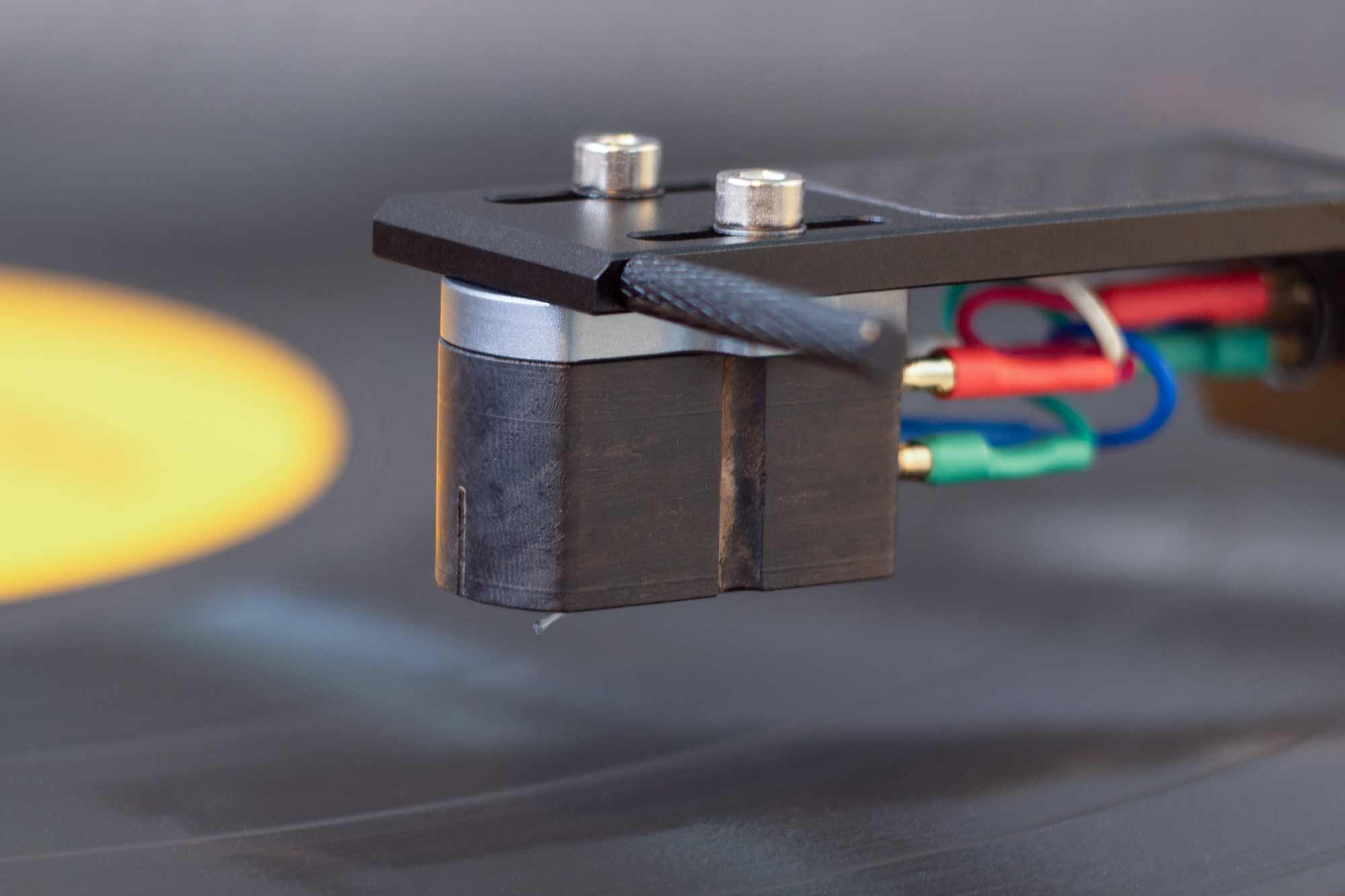
1/2-inch Mount – Le Son LS10 MKII cartridge
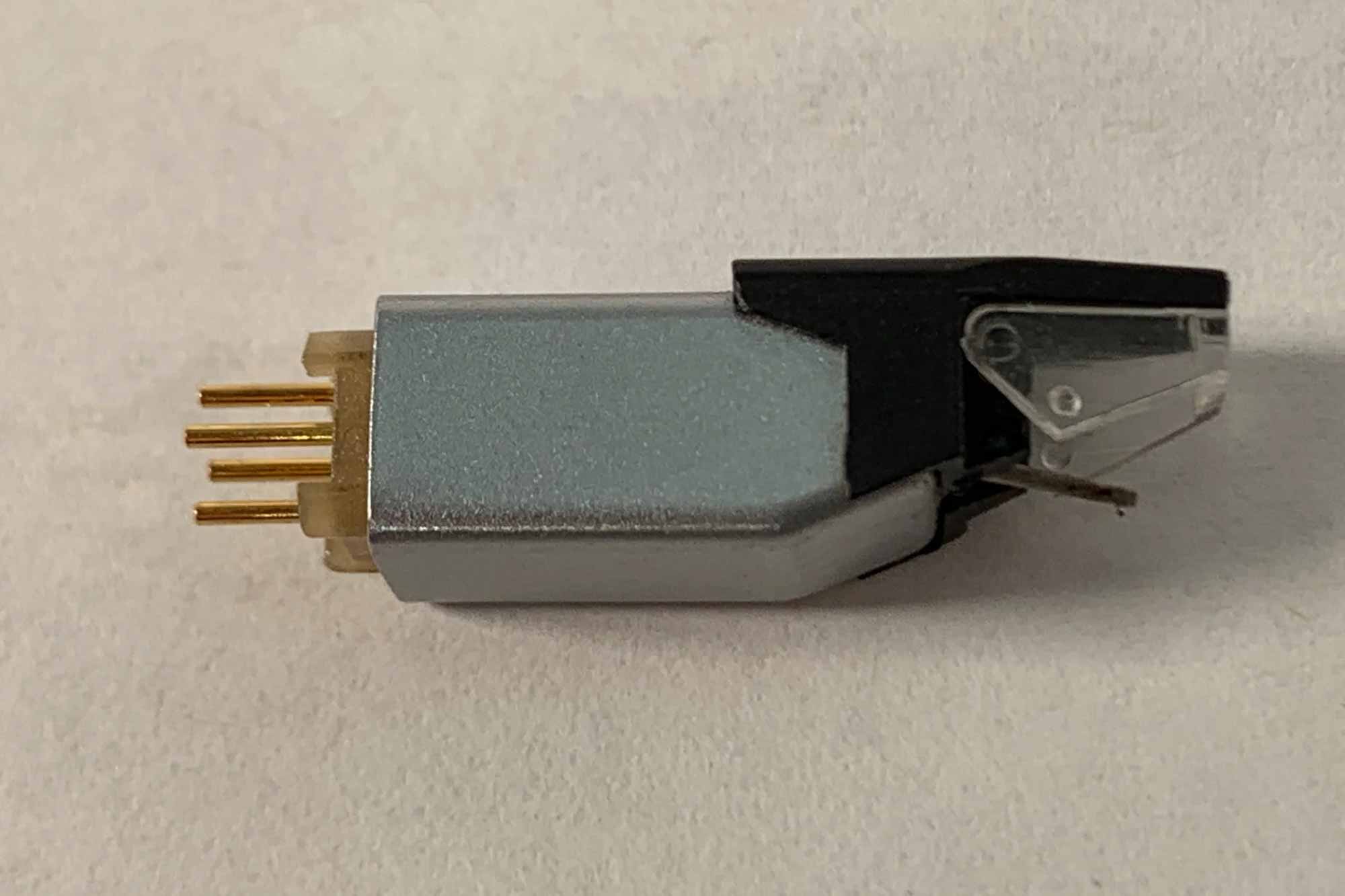
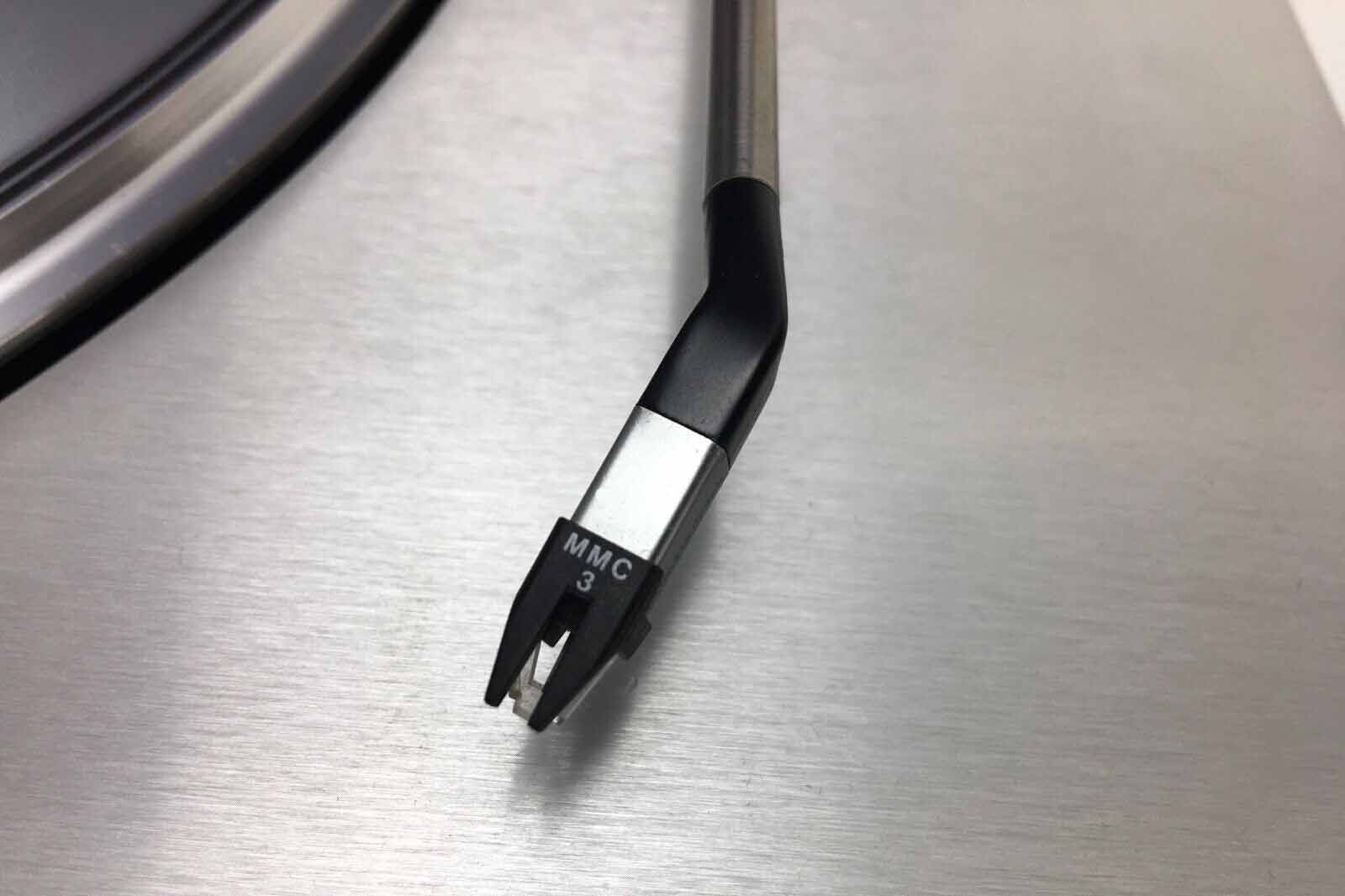
P-Mount – B&O MMC3 cartridge
From our experience, the 1/2-inch mount is better than the T4P mount at coupling the cartridge to the headshell.
If you have a P-mount cartridge and want to use it on a 1/2-inch mount headshell, there are some adaptors available out there.
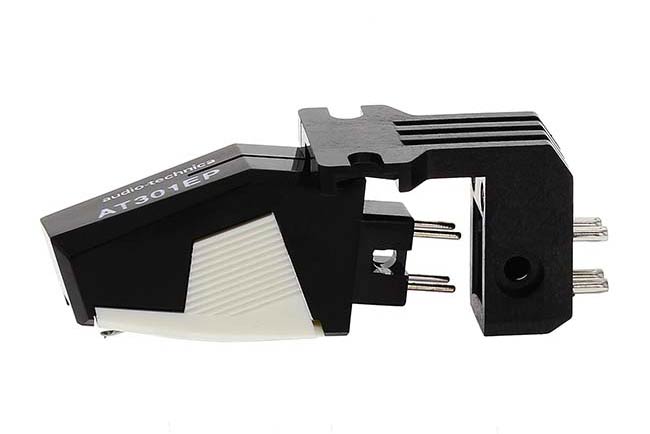
P-Mount to Standard Mount adaptor with an Audio Technica AT301EP cartridge
3. Cartridge compliance and tonearm effective mass
Any cartridge / headshell / tonearm combination will exhibit resonance at a specific frequency (or more).
This resonance is due to the interaction of the cartridge (acting as a spring), and the weight of the arm (acting as a mass). The “springiness” of the phono cartridge is described as compliance, and the weight of the arm is specified as effective mass.
At resonance, the cartridge / headshell/ tonearm assembly produces a dramatic rise in output. An increase of 3 to 6dB is common. This output boost can cause problems if it occurs in the audible range (above 20Hz), or in the area where record warps and rumble occur (below 5Hz).
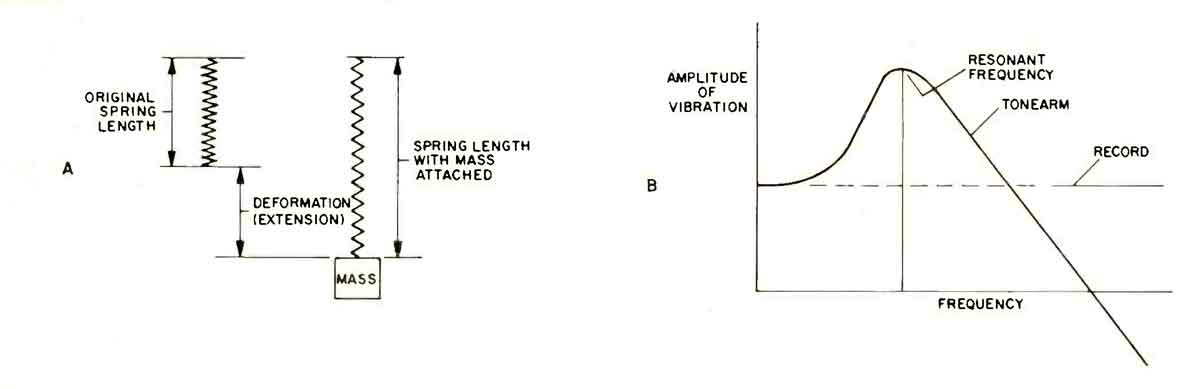
A: deformation of a spring by adding mass; B: change in amplitude of vibration at resonant frequency
Therefore, the goal in matching a specific cartridge and tonearm is to achieve a resonance in the 8 to 12 Hz range.
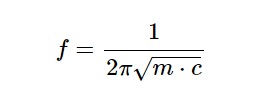
Here is the formula for estimating the resonant frequency:
π = 3.1415927
m = Total effective mass (in g) = mass of cartridge + headshell & wires + fixing screws + tonearm effective mass
c = Cartridge dynamic compliance (in µm/mN at 10Hz)
Knowing this, it appears that the key point in choosing a detachable headshell is its weight!
To calculate the optimum headshell weight for your tonearm and cartridge, you can find a good online resonance calculator here.
If you are still comparing cartridge types, output levels, and system matching, our guide on how to choose the best phono cartridge is a useful companion to this resonance discussion.
4. Materials and construction work
Headshells can be made from various materials, each imparting its own characteristics to the component.
The Le Son Voyager headshell is one example. It is machined from AZ31B magnesium, uses a standard SME-type bayonet mount, offers azimuth adjustment, and sits about 1.5 mm lower than typical Technics headshells, which can help when setting stylus rake and overhang.
The materials often used for the body are aluminum, magnesium, titanium, carbon fiber, and wood (ebony, maple, rosewood, and more).
Good headshells also feature high quality connectors, which ensure optimum and long lasting electrical contacts between the cartridge and the tonearm.
Besides body and connectors materials, the overall design also affect the final result.
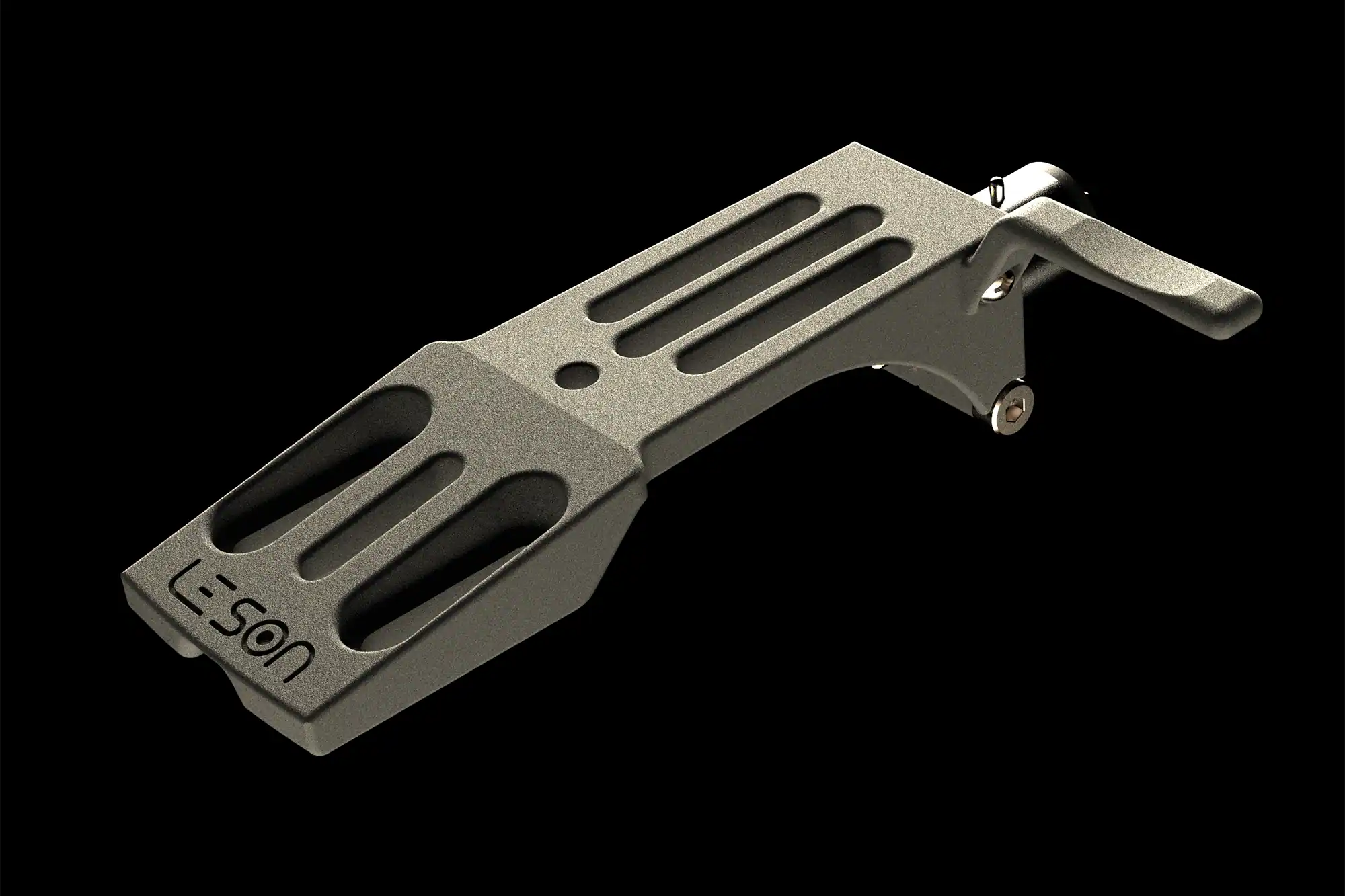
Le Son Voyager headshell
Overall, it is difficult to say if a specific headshell material will work well with a given tonearm, however we now know that the headshell weight is the most important factor for optimum performance.
We therefore recommend to get the headshell weight right before anything else.
5. Headshell alignment possibilities
Regarding alignment, it is important that your headshell provides enough space to set the correct cartridge stylus overhang & tilt. If the latter are incorrect, it will impact the tracking accuracy and the sound quality will greatly suffer.
For example, SME headshells have a great look with their folded edges, but they cannot host all cartridges due to their limited available space.
For the practical side of cartridge alignment, our cartridge alignment protractor guide walks through overhang and setup in more detail.
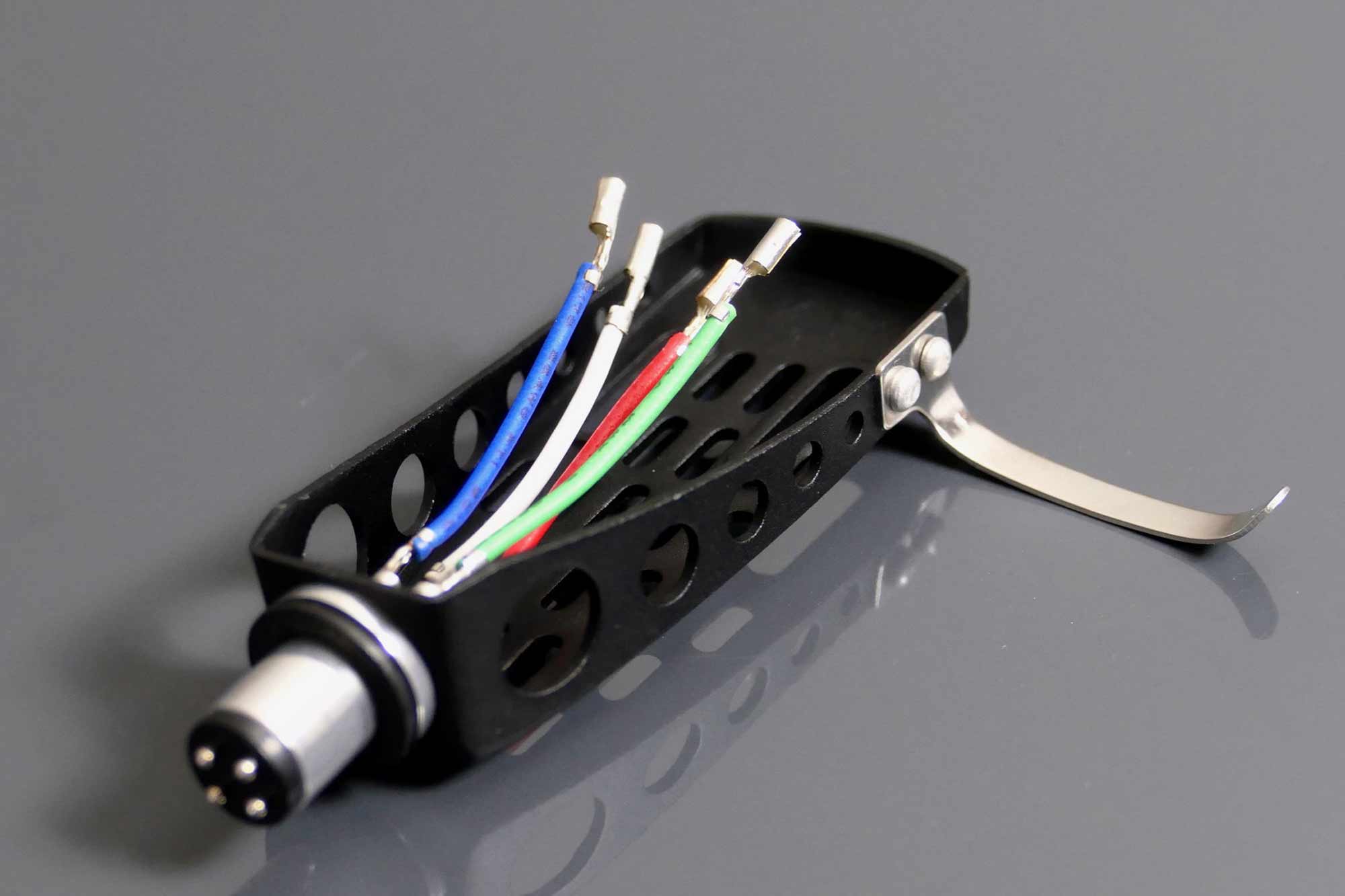
SME style headshell – Very light but provides limited space for cartridge alignment
Besides overhang, certain headshells also offer adjustable azimuth. This feature adds weight and is rarely needed if the cartridge and tonearm are well made.
A headshell washer can help with coupling and fine height adjustment on SME-type and EMT-type bayonet mounts.
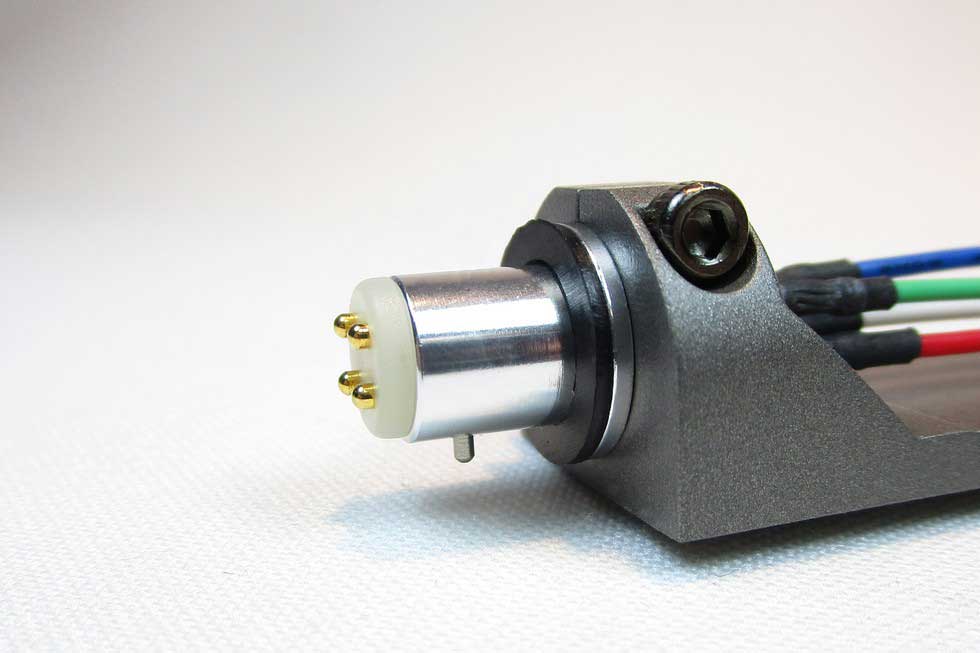
Adjustable azimuth headshell – Magnesium body, SME style connector
Conclusion
Choosing the right headshell is a practical step toward getting the most from your cartridge and tonearm. Start with the connector, get the weight right for your cartridge’s compliance, then consider materials, adjustability, and the room you need for clean alignment.
If you would like a second opinion on a pairing, send us your turntable, tonearm, and cartridge details and we will help you check the match. You are also welcome to compare our full cartridge range.
Frequently Asked Questions
- What is a headshell on a record player?
- What is the difference between a fixed and a removable headshell?
- Does my turntable use an SME-type connector?
- Will any headshell fit any turntable?
- Does the headshell affect sound and alignment?
- How heavy should my headshell be?
- What cartridge mount do most headshells use?
The headshell is the small platform at the end of the tonearm that holds the phono cartridge. On many arms it is removable, which lets you swap cartridges and adjust alignment more easily.
A fixed headshell is built into the tonearm and cannot be changed. A removable headshell detaches, usually through an SME-type bayonet mount, so you can swap cartridges and adjust more easily. Fixed designs can give firmer coupling; removable designs give versatility.
Most J-shaped and S-shaped arms, including the Technics SL-1200 family, use the SME-type four-pin bayonet connector, so SME-type headshells generally fit them. Some vintage arms from makers such as Thorens, Denon, and Onkyo used proprietary connectors, so check yours before buying.
No. Fit depends on the connector. SME-type headshells fit SME-type and Technics SL-1200 arms, but proprietary vintage connectors and fixed headshells are exceptions. Confirm the connector first.
It plays a supporting role. The headshell sets how firmly the cartridge couples to the arm, how much weight sits at the end of the arm, and how much room you have to align the cartridge. Weight matters most, because it combines with cartridge compliance to set the resonance.
Headshell weight is the main factor to get right. It adds to the tonearm’s effective mass, which pairs with cartridge compliance to set the resonant frequency, ideally in the 8 to 12 Hz band. As a rule, lower-compliance cartridges suit more mass and higher-compliance cartridges suit less.
Most modern cartridges use the standard half-inch mount, with holes 12.7 mm apart. Some older or entry-level models use the P-mount (T4P) system. Adaptors exist if you need to fit a P-mount cartridge to a half-inch headshell.
Credits
Pictures:
Sascha Zeier from Riverside Audio Switzerland. This company specializes in vintage Thorens parts and restored turntables & tonearms. We used some pictures of their restored SME tonearms and vintage Thorens headshells for the purpose of this blog post.
Further readings about arm / cartridge resonance:
The Korf Blog. They have released an interesting article in 2 parts about Cartridge Compliance and Tonearm Effective Mass here: Part I and Part II.
L’Or du Son
The analog sound newsletter
A monthly selection of analog news, gear reviews, record releases and music discoveries, curated to keep you inspired and connected to the world of analog sound.

Gregory de Richemont
Gregory is the founder of Le Son, where high-fidelity sound is approached as both a technical pursuit and an emotional experience. After a career in international business, he followed a more personal path into analog playback, music and craftsmanship. His work is dedicated to listening experiences that do more than impress: they create a deeper connection with music. Learn more on our About page.